Sep 17, 2026
Corporate Gift Sourcing for Jordan: MOQ, Logo, Packaging and Shipping Checklist
A buyer-focused checklist for sourcing mixed corporate gifts for Jordan, covering MOQ, logo methods, samples, packaging, quotations, Incoterms and delivery planning.

Corporate Gift Sourcing for Jordan: MOQ, Logo, Packaging and Shipping Checklist
A corporate buyer planning a promotional collection rarely needs only one product. A recent anonymous inquiry requested ceramic mugs, stainless steel tumblers, notebooks, pens, tote bags, multi-charging cables, tech accessories, umbrellas, keychains and gift sets for delivery to Amman, Jordan.
This type of inquiry is useful because it shows what buyers actually need before comparing suppliers: suitable models, minimum order quantities, price breaks, logo methods, samples, packaging, production lead time, carton information, trade terms and shipping options.
The following checklist explains how to turn a broad product request into a quotation that can be compared and approved.
- Start With the Program, Not the Catalog
A supplier can send hundreds of catalog pages, but a shorter brief normally produces better recommendations. Before requesting prices, define:
- Who will receive the gifts: employees, clients, distributors or event visitors
- The estimated quantity for each product
- The target budget range
- The required arrival date in Amman
- Whether products will be distributed separately or combined into gift sets
- Preferred colors and logo style
- Whether the program will need repeat orders
These details help the supplier recommend realistic products instead of sending unrelated options.
For example, an umbrella for an executive gift set has different material, packaging and branding expectations from an umbrella used as a mass event giveaway. The product name alone is not enough.
- Group the Products by Buying Requirement
A mixed corporate gift collection becomes easier to manage when products are grouped by similar production and inspection needs.
Drinkware:
Ceramic mugs and stainless steel tumblers need confirmation of capacity, material, lid type, logo area, individual packing and transit protection. For tumblers, ask how leak resistance and surface finish will be checked.
Stationery:
Notebooks and pens should be compared by paper quality, page count, binding, writing performance, refill type and logo position. Ask whether the notebook and pen can be packed as one set.
Textiles:
Tote bags require fabric material, fabric weight, dimensions, handle length, stitching and load-bearing checks. Screen printing may suit simple logos, while heat transfer or embroidery may suit other designs.
Technology products:
Multi-charging cables and other tech accessories require connector details, input and output specifications, compatibility, product testing and clear user instructions. Confirm the exact cable configuration before requesting a final quotation.
Outdoor and everyday products:
Umbrellas and keychains can vary greatly in construction. For umbrellas, check diameter, ribs, opening mechanism, handle and sleeve. For keychains, specify material, shape, plating color and attachment type.
Gift sets:
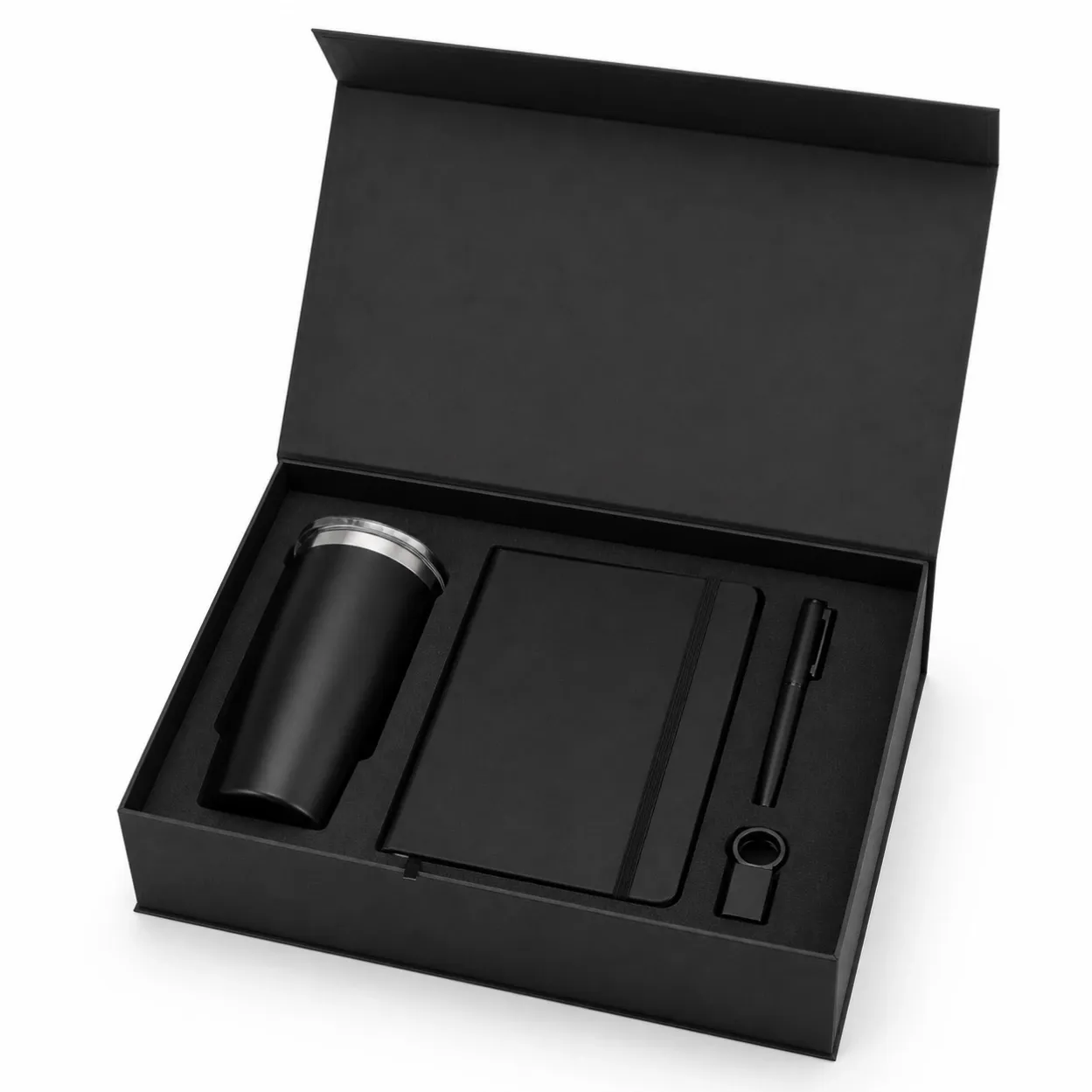
A gift set is not only a group of products. It also requires a pack-out plan: box dimensions, insert material, product position, welcome card, outer sleeve, barcode or label, and protection during shipping.
- Compare MOQ Per Item, Not Only the Total Order
The minimum order quantity may differ for every product and branding method. A buyer might need 300 tote bags but only 100 tumblers. One supplier may quote a low product MOQ but require a higher quantity for custom colors, special packaging or a particular logo process.
Ask the quotation to separate:
- MOQ for a standard product without branding
- MOQ for adding a logo
- MOQ for a custom product color
- MOQ for custom packaging
- MOQ for mixed colors
- Reorder MOQ
For a smaller first order, use standard colors and one logo position where possible. This reduces setup complexity and makes repeat ordering easier.
- Request Quantity-Based Pricing in a Consistent Format
To compare suppliers, request the same quantity breaks for every shortlisted model. For example, a buyer can ask for prices at three planned quantity levels rather than requesting an undefined best price.
Each quotation line should identify:
- Product code and clear description
- Material, size, color and capacity
- Quantity
- Unit price
- Logo method and logo cost
- Setup or mold charge, if any
- Individual packaging
- Sample cost
- Production lead time
- Trade term
- Quotation validity
The lowest unit price is not always the lowest landed cost. A heavier product, oversized gift box or inefficient carton can increase freight cost more than expected.
- Match the Logo Method to the Product Surface
The logo process affects appearance, durability, cost and MOQ. Ask the supplier to recommend a method for each material instead of applying the same process to every item.
Common examples include:
- Ceramic mugs: screen printing, transfer printing or other suitable ceramic decoration
- Stainless steel tumblers: laser engraving, screen printing or UV printing
- Notebooks: printing, debossing, foil stamping or a branded paper band
- Tote bags: screen printing, heat transfer or embroidery
- Cables and tech accessories: printing, laser marking or a branded label
- Umbrellas: panel printing
- Keychains: printing, engraving, enamel or molded branding
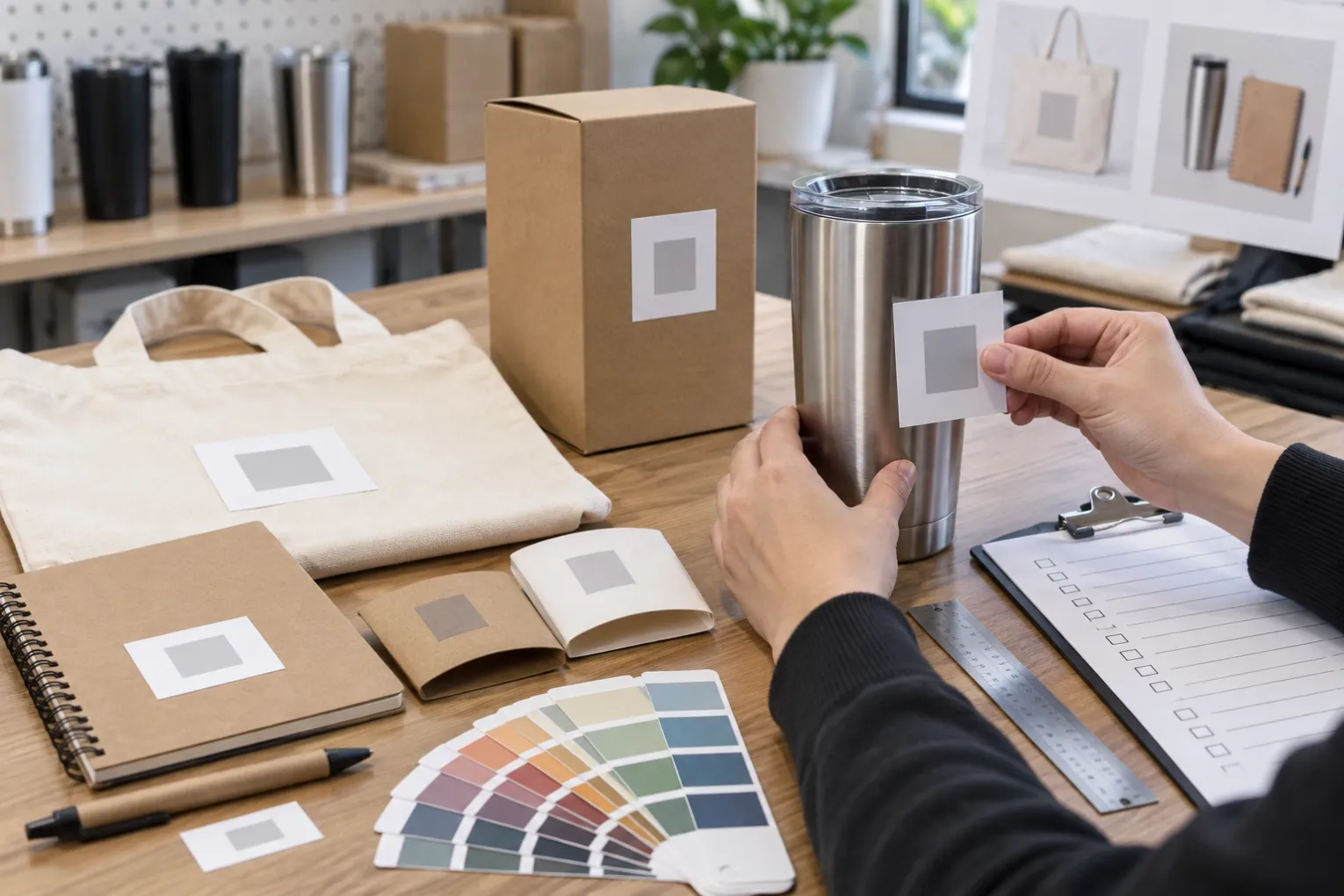
Before mass production, approve the logo size, color, position and orientation. A digital mockup is useful, but a physical sample is more important when exact color, surface adhesion, embroidery quality or packaging fit affects the decision.
- Ask for a Sample Plan
Samples answer different questions at different stages.
A stock sample checks the product’s size, material, function and general quality. A branded sample checks the actual logo process and position. A pre-production sample confirms the final combination of product, artwork and packaging.
The buyer should ask:
- Is the sample blank or branded?
- Is there a logo setup charge?
- How long does sample preparation take?
- Can the sample charge be credited after an order?
- Which courier method will be used?
- Will the supplier provide photos or video before dispatch?
For mixed-category projects, it may be efficient to consolidate several approved samples into one courier shipment.
- Define Individual Packaging and the Final Gift-Set Layout
Packaging protects the product, communicates the brand and affects shipping volume. Request both the individual package and master carton details.
Individual packaging options may include:
- Polybag or paper sleeve
- White or kraft box
- Printed retail box
- Protective insert
- Gift box with multiple compartments
- Welcome card or instruction card
- Barcode, SKU or recipient label
For a gift set, provide a simple packing diagram or ask the supplier to create one. Confirm which side of each product faces upward, where the logo appears and how empty space is controlled.
Before mass pack-out, approve one complete assembled set. A collection can look consistent in separate product photos but feel disorganized when placed together.
- Confirm Production Lead Time by Milestone
A single lead-time number can be misleading. Ask for the schedule in stages:
- Product selection and quotation
- Artwork confirmation
- Sample preparation
- Sample approval
- Material preparation
- Mass production
- Inspection
- Gift-set assembly
- Export packing
- Handover to the freight forwarder
The arrival date should include approval time, production, inspection, export handling and international transport. If the event date is fixed, tell the supplier the required arrival date rather than only the preferred shipment date.
- Use Carton Information to Estimate Freight
A freight quotation needs more than total product quantity. Request:
- Units per carton
- Carton dimensions
- Net weight and gross weight
- Number of cartons
- Total gross weight
- Total volume
- Whether cartons can be safely stacked
- Any battery or restricted-product information
For a mixed shipment, ask for both item-level carton data and the final consolidated packing list. This allows a freight forwarder to compare transport options for Amman using the actual shipment profile.
- Understand EXW and FOB Before Comparing Prices
EXW and FOB prices cover different responsibilities.
An EXW quotation generally places collection and export arrangements with the buyer from the supplier’s premises. It can be useful when the buyer already has a China-based consolidator or freight forwarder.
An FOB quotation generally includes delivery to the named port and export clearance under the agreed terms. The exact named port must be written on the quotation.
Do not compare an EXW price from one supplier directly with an FOB price from another without adding the missing costs. Ask the freight forwarder to estimate the full route and confirm current customs, documentation and delivery requirements for Jordan.
- Plan Mixed-Category Consolidation
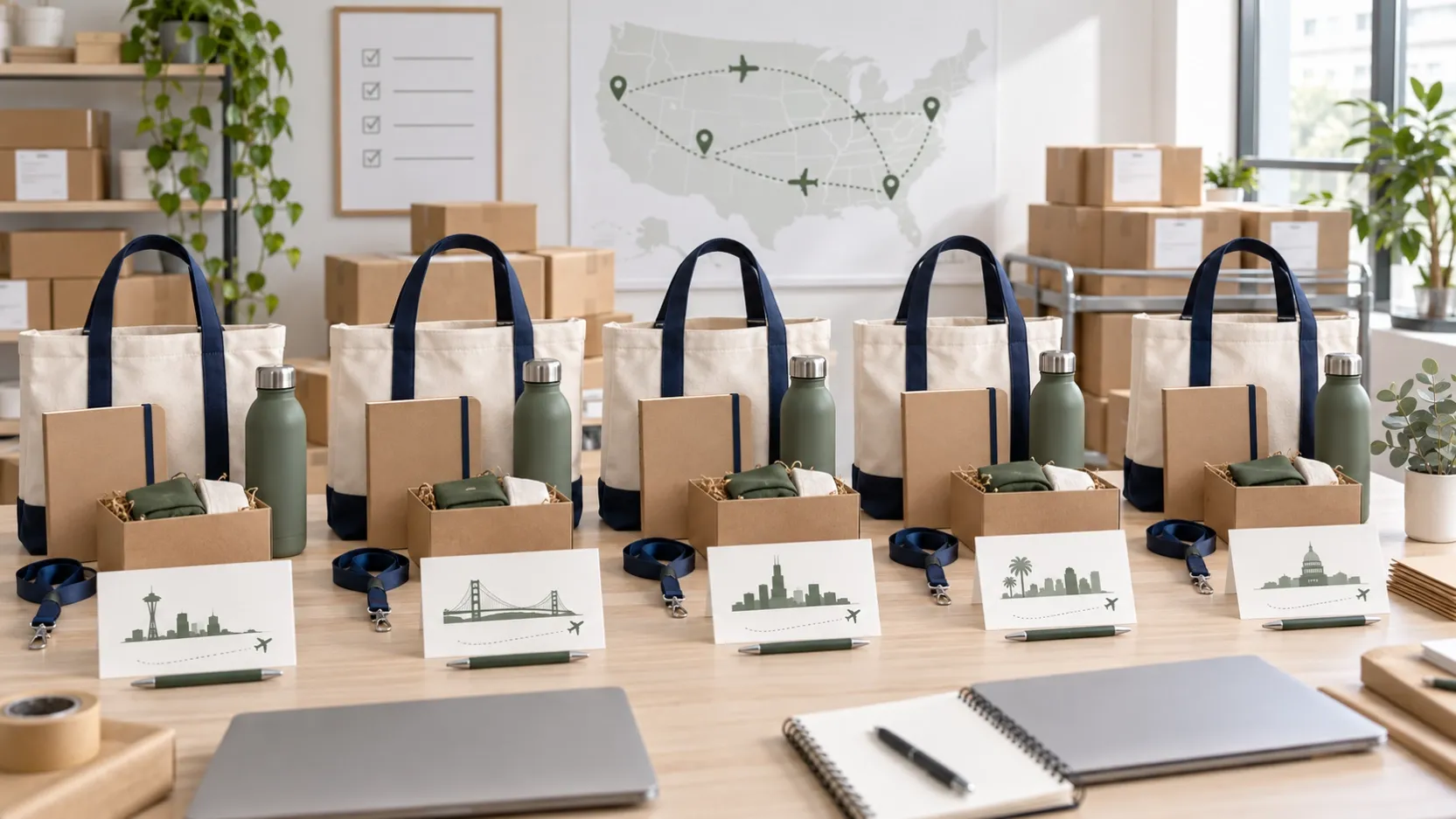
Combining mugs, bags, stationery, cables, umbrellas and keychains into one shipment can reduce coordination, but it requires a clear consolidation process.
Confirm:
- Where all goods will be collected
- Who checks incoming products
- How shortages or defects will be reported
- Whether products will remain in separate cartons or become gift sets
- Who prepares the final packing list
- Whether labels and product codes remain traceable
- When the consolidated shipment is ready for inspection
A responsible coordinator should not only receive cartons. The coordinator should verify quantities, packaging, artwork and carton markings before shipment.
- Build a Reorder System From the First Order
A long-term promotional collection needs repeatable specifications. Save the approved product code, material, color, logo size, logo position, packaging, carton details and sample photos for every item.
Also agree on:
- Reorder MOQ
- Expected reorder lead time
- Whether the exact material and color will remain available
- How substitutions will be approved
- Who holds the artwork files
- Whether packaging can be reused across several products
This documentation reduces mistakes when a new employee or purchasing manager handles the next order.
Buyer Inquiry Checklist
A complete request for quotation should include:
- Product categories and intended use
- Quantity per product
- Target budget or target price range
- Standard or custom colors
- Logo artwork and preferred branding style
- Individual packaging requirements
- Gift-set assembly requirements
- Sample requirements
- Required arrival date
- Delivery destination: Amman, Jordan
- Preferred trade term
- Need for mixed-category consolidation
- Expected repeat-order frequency
Final Takeaway
The strongest corporate gift quotation is not simply a price list. It connects each product specification with branding, packaging, inspection, carton data and delivery planning.
For buyers sourcing a mixed promotional collection for Jordan, the practical sequence is: define the use case, shortlist models, compare MOQ and price breaks, approve samples and artwork, confirm pack-out, collect carton data and then select the shipping plan.
To request suitable product options, share the quantity per item, logo file, target budget, packaging preference and required arrival date. Explore available promotional products at https://www.suoyigroup.com/products.