Sep 16, 2026
Employee Welcome Kit Products Compared: Tote Bag, Bottle, Notebook or Tech Pouch?
A practical comparison of four employee welcome kit products, covering use cases, logo options, MOQ, packing, budget and reorder considerations.
Employee Welcome Kit Products Compared: Tote Bag, Bottle, Notebook or Tech Pouch?
A welcome kit should help a new employee feel prepared, included and confident from the first day. The best kit is not necessarily the one with the most products. It is the one in which every item has a clear job, fits the delivery method and can be reordered without creating unnecessary cost.
For procurement teams comparing employee welcome kit products, four items appear repeatedly: tote bags, drinkware, notebooks and tech pouches. Each works well in a different situation. This guide compares their practical value, branding options, packing risks and purchasing questions.
- Tote Bag: Visible Branding and Built-In Packaging
A tote bag can be both a gift and the outer container for the rest of the kit. It offers a large logo area and is useful for office onboarding, conferences, training days and employee events.
Best for:
- On-site onboarding and company events
- Kits containing several flat or lightweight items
- Programs that need visible branding at a controlled cost
Common branding methods include screen printing, heat transfer and embroidery. Screen printing is usually suitable for simple one- or two-color artwork. Heat transfer can reproduce more detailed graphics. Embroidery creates a premium result but may increase cost and production time.
Buyer checks:
- Fabric weight and handle strength
- Bag dimensions after the other kit items are selected
- Logo size and print position
- Colorfastness and stitching quality
- Whether the bag will replace a separate gift box
A common mistake is choosing the tote first and discovering later that the bottle or notebook does not fit. Confirm the finished product dimensions and pack-out layout before approving the order.
- Bottle or Tumbler: High Daily Use and Perceived Value
Drinkware is often the most visible high-value item in an employee welcome kit. A bottle or tumbler can stay on a desk, travel with the employee and reinforce the brand over a long period.
Best for:
- Office-based teams
- Wellness and sustainability programs
- Premium employee or client gift kits
- Hybrid staff who travel between home and office
Logo options may include screen printing, laser engraving or UV printing, depending on the material and surface. Laser engraving is durable on suitable metal surfaces. Printing can provide stronger brand colors but requires artwork and adhesion checks.
Buyer checks:
- Capacity and overall weight
- Lid seal and leak testing
- Food-contact material requirements for the destination market
- Protective packing for transit
- Whether the bottle fits the chosen bag or shipping carton
Drinkware increases shipping weight and needs better protection than stationery. For home delivery, ask the supplier to test the complete packed kit rather than only the bottle’s individual box.
- Notebook and Pen: Easy to Pack, Easy to Reorder
A branded notebook is one of the simplest welcome kit products to distribute. It works across departments, is easy to store and usually creates fewer shipping problems than fragile or bulky items.
Best for:
- Training and orientation
- Sales teams and meetings
- Remote employee kits
- Programs with frequent small reorders
Branding options include printed covers, debossing, foil stamping and branded belly bands. A belly band can carry campaign information while keeping the notebook design clean.
Buyer checks:
- Paper weight and writing performance
- Binding strength and lay-flat behavior
- Page count and ruling style
- Pen loop, pocket or elastic closure requirements
- Cover color consistency between batches
A notebook is also useful when the employer needs to include a printed welcome message, first-week checklist or QR code linking to onboarding resources.
- Tech Pouch: Practical for Hybrid and Remote Teams
A tech pouch gives employees one place to store charging cables, adapters, earbuds and small accessories. It feels more modern than a basic stationery item and is especially relevant to hybrid teams.
Best for:
- Remote and hybrid onboarding
- Technology, consulting and sales teams
- Travel-oriented employee programs
- Kits that include cables, chargers or power banks
Branding can be applied by screen print, heat transfer, woven label, rubber patch or embroidery, depending on the fabric and structure.
Buyer checks:
- Internal dimensions and compartment layout
- Zipper quality and puller strength
- Cable and charger sizes
- Padding level
- Whether the pouch is shipped empty or pre-packed
Before approving the pouch, provide the supplier with the dimensions of every accessory that must fit inside. A visually attractive pouch can still fail if the compartments are too narrow for the selected charger.
Which Product Mix Fits the Onboarding Scenario?
Office onboarding:
Use a tote bag, bottle and notebook. The tote supports handover at reception, the bottle adds perceived value, and the notebook is immediately useful during orientation.
Remote employee onboarding:
Use a lightweight bottle or cup, notebook and tech pouch. Keep the complete parcel compact to control courier cost and reduce transit damage.
Sales or event team onboarding:
Use a tote bag, bottle, lanyard and notebook. Choose consistent brand colors because these products may be visible at customer meetings or trade shows.
Executive or long-service welcome:
Use a premium drinkware item, upgraded notebook and structured tech organizer. Focus on material quality and restrained branding instead of adding more low-value items.
A Practical Budget Framework
For early planning, procurement teams can divide the budget into four parts:
- Products: approximately 60–70%
- Branding and setup: approximately 10–15%
- Packaging and pack-out: approximately 10–15%
- Shipping contingency and replacement stock: approximately 10–15%
These percentages are a planning framework, not a quotation. Product material, quantity, logo method, destination and delivery deadline can change the final allocation.
MOQ and Small-Batch Strategies
Small onboarding programs do not always need fully custom products. A lower-risk approach is to use standard product colors, one logo position and shared packaging across several items.
To keep the minimum order quantity manageable:
- Select existing colors instead of custom color matching
- Use one-color artwork where appropriate
- Standardize the kit for several departments
- Order a small buffer for late hires and damaged parcels
- Keep artwork and packing instructions on file for reorders
For a 100-person program, a 5–10% buffer can cover new starters, address errors and replacement requests. The exact buffer should reflect hiring frequency and storage capacity.
Approval and Quality-Control Workflow
A reliable welcome kit order should move through clear checkpoints:
- Confirm recipient count, delivery locations and target date.
- Select the product mix and verify that all items fit together.
- Approve artwork, logo size, color and position.
- Review a physical or pre-production sample when the branding risk is high.
- Approve the complete pack-out, including inserts and labels.
- Inspect appearance, quantity and carton markings before shipment.
- Keep approved specifications for the next reorder.
A single product sample does not prove that the final kit will pack or ship correctly. Ask for a photo or video of one fully assembled kit before mass pack-out.
What to Include in an Inquiry
A useful inquiry gives the supplier enough information to recommend realistic options. Include:
- Number of recipients and quantity buffer
- Office, home-delivery or mixed distribution
- Required products or intended use
- Target budget range
- Logo file and preferred branding style
- Destination country and postal codes if available
- Required arrival date
- Individual packing and insert requirements
- Expected reorder frequency
If the product mix is still open, describe the employee profile and delivery scenario. A supplier can then compare alternatives instead of quoting unrelated items.
Frequently Asked Questions
Can different welcome kit products be combined in one shipment?
Yes. Mixed-category consolidation is possible when dimensions, supplier lead times and packing instructions are confirmed in advance. The complete kit should be checked before final carton packing.
Should every product carry the company logo?
Not necessarily. One or two clearly branded hero items can be more effective than placing a large logo on every product. Packaging, a welcome card or a sleeve can carry supporting brand information.
What is the best item for a low shipping budget?
Notebooks, pens, flat tote bags and compact tech pouches are usually easier to ship than heavy drinkware. However, the best choice depends on the recipient and the expected daily use.
When should we request a sample?
Request a sample when color, fit, material feel, logo position or packaging quality will affect approval. For repeat orders, retain the approved sample or detailed specification as a reference.
How can we make future reorders easier?
Use standard colors, record product codes, save approved artwork and define a fixed packing list. Decide who can approve a reorder and at what stock level it should be triggered.
Build the Kit Around the Employee’s First Week
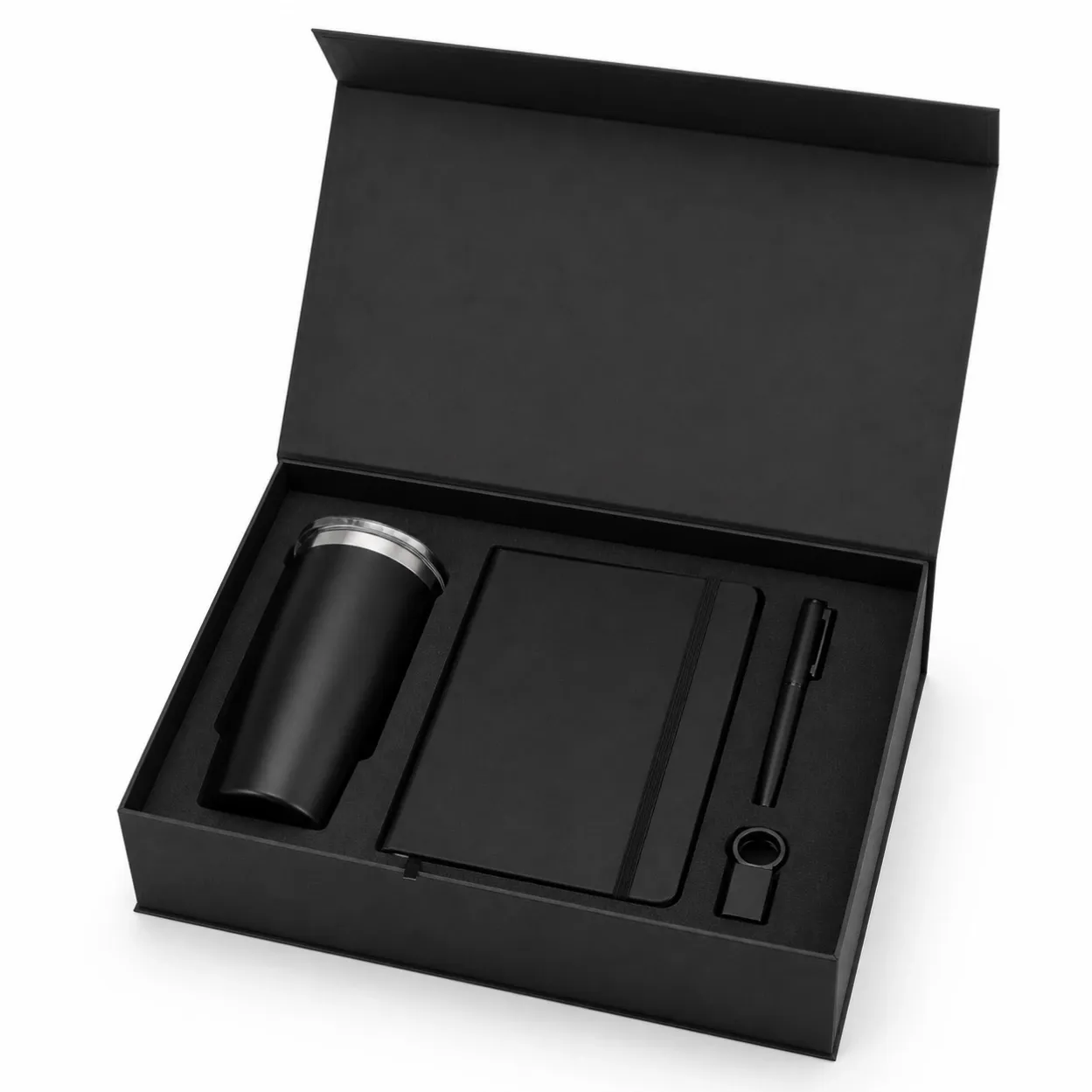
A successful employee welcome kit is a small operating system for the first week: the tote carries the materials, the bottle supports daily use, the notebook helps orientation and the tech pouch organizes work accessories. Select the items by application, not by appearance alone.
Explore practical promotional products for employee onboarding at https://www.suoyigroup.com/products. For a useful quotation, share the recipient count, delivery locations, target budget, logo requirements and required arrival date.