Nov 1, 2026
Custom Plush Toy Buyer FAQ: Materials, Logo, Filling and Samples
Clear answers to common buyer questions about custom plush toy fabrics, logo methods, filling, samples, packaging and order checks.
Custom Plush Toy Buyer FAQ: Materials, Logo, Filling and Samples
Custom plush toys can work as event gifts, retail merchandise, children’s gifts and brand mascots. Buyers often focus on the shape first, but the fabric, filling and logo method have a major effect on appearance, cost and lead time.
Below are clear answers to the questions buyers ask most often before placing an order.
- Which plush fabric should I choose?
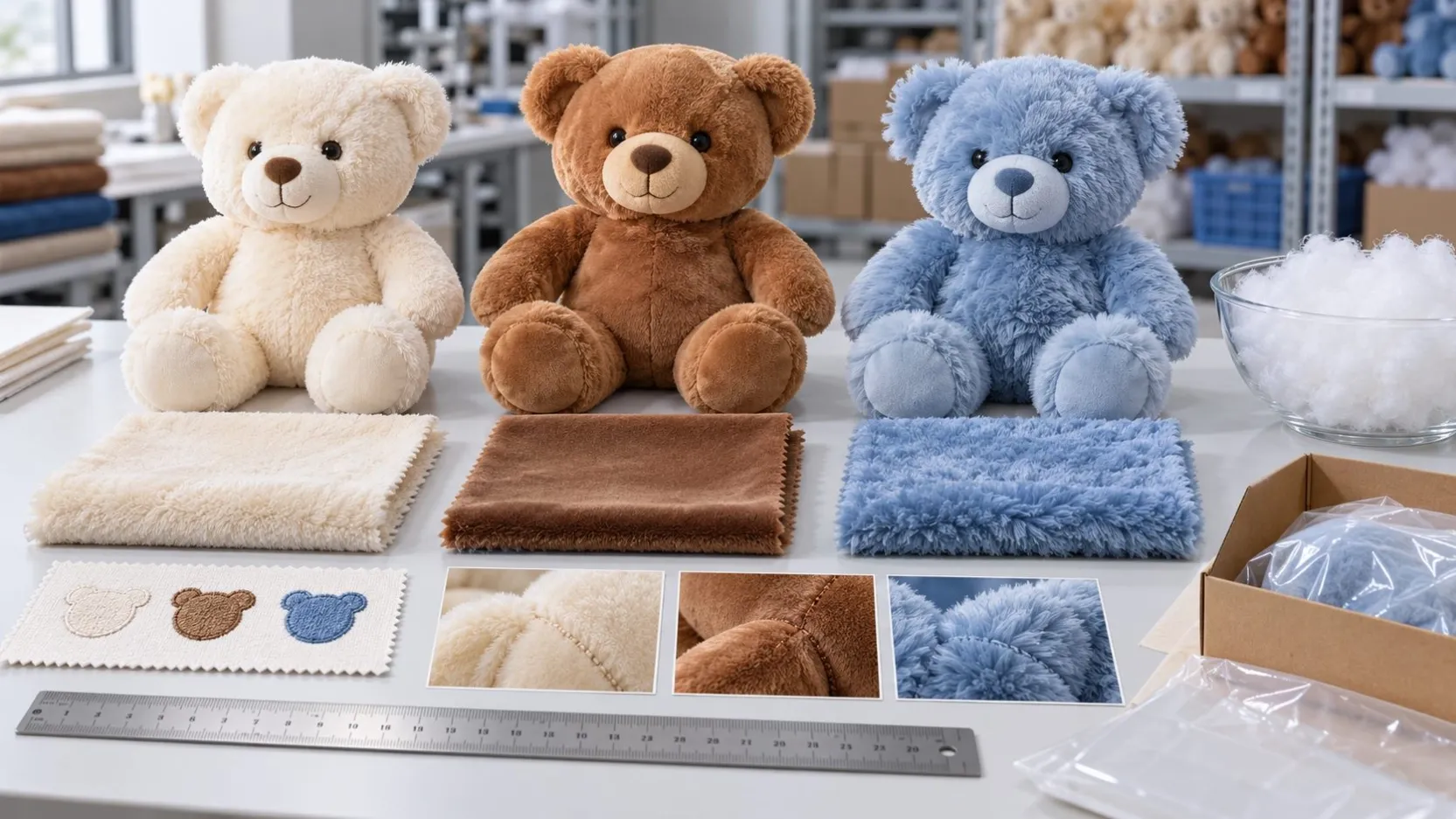
Short plush has a neat, compact surface. It is suitable for simple teddy bears, small mascots and designs with clear embroidery.
Velboa is a smooth, low-pile knitted fabric. It works well for clean shapes, printed patterns and detailed color designs.
Crystal super soft has a softer, fuller hand feel. It is often selected for premium teddy bears and comfort gifts, but its longer pile can hide very small embroidery.
Ask the supplier to confirm the fabric name, pile height, weight, color and stretch. A small fabric swatch should be approved before production.
- Can a logo be embroidered directly on the toy?
Yes. Embroidery is durable and gives a professional finish. It works best on a flat, visible area with enough space.
Very thin lines and tiny letters may not remain clear on soft fabric. For detailed artwork, a woven label, printed patch, T-shirt or hangtag may be a better choice.
Approve an actual embroidery sample—not only a digital proof—before mass production.
- How firm should the filling be?
The filling amount controls shape, weight and softness. A display mascot may need a firmer body, while a teddy bear usually needs a softer feel.
Ask for a pre-production sample using the same filling type and filling weight planned for the order. Check whether the head, arms and legs keep their shape after packing and handling.
- How can buyers control color?
Screens are not reliable for final color approval. Request fabric swatches and review them under natural light.
Record the approved material code or color reference. Also confirm whether small shade differences between production batches are acceptable. This is especially important when the plush toy must match other branded gifts.
- What should be checked on the sample?
Check the sample from the front, side and back. Review:
• Overall height and width
• Fabric type and pile direction
• Body proportions
• Eye, nose and accessory placement
• Embroidery size and position
• Seam strength and loose threads
• Filling firmness and finished weight
• Labels, hangtags and packaging
Mark every requested change in one document. This reduces misunderstandings when several people are reviewing the sample.
- What safety information should the buyer provide?
Tell the supplier the destination market, intended age group and sales or promotional use. These details affect the choice of attached parts, labels, seam strength and testing requirements.
If the toy is intended for children, confirm the required tests and documentation for the destination market before production. Avoid approving the sample until all functional and safety requirements are clear.
- What packaging options are available?
Common options include an individual polybag, drawstring bag, printed gift box or bulk carton.
Vacuum or compressed packing can reduce shipping volume, but the toy must recover its shape after unpacking. Ask the supplier to test this on the approved sample before using compressed packing for the full order.
For a premium corporate gift, presentation packaging may be more important than saving carton space.
- How long does sampling take?
Timing depends on the shape, fabric availability, embroidery and accessories. A simple plush sample can be faster than a complex mascot with custom clothing and several small parts.
Provide clear artwork, dimensions, Pantone references, logo files and packaging requirements at the beginning. Fewer missing details usually mean fewer sample revisions.
- What should a quotation include?
A useful quotation should state:
• Product size and material
• Filling type
• Logo method and position
• Packaging
• Sample cost and sample time
• MOQ
• Unit price at relevant quantities
• Production lead time
• Carton information
• Shipping terms
Comparing quotations is easier when every supplier is pricing the same specification.
Final Buying Advice
Do not approve a custom plush toy based only on a rendering. Approve the fabric, embroidery and physical sample before mass production. Keep the final specification, sample photos and packaging details together as the production reference.
Need help preparing a custom plush toy specification or quotation request?
https://www.suoyigroup.com/contact-us