Oct 8, 2026
Logo Printing on Promotional Products: Pad Print, UV Print, Laser Engraving or Embroidery?
A practical guide to choosing pad printing, UV printing, laser engraving or embroidery for branded promotional products.
Choosing a promotional product is only half of the buying decision. The logo method affects appearance, durability, cost, minimum order quantity and production time. A decoration process that works well on a stainless-steel bottle may not be suitable for a fabric bag or a silicone accessory.
This guide explains four common branding methods and the questions buyers should confirm before approving production.
- Pad printing: practical for small curved surfaces
Pad printing transfers ink with a soft silicone pad. It is often used on pens, keychains, small plastic accessories, charging cables and other products with limited branding space.
Best for:
• Small logos
• One or two solid colors
• Plastic, metal or coated surfaces
• Curved or slightly uneven areas
Buyer checks:
Confirm the maximum print area, Pantone color, number of colors and whether a white base layer is needed on dark products. Very fine lines and tiny text may need to be simplified.
Pad printing is usually economical, but each additional color can add setup cost and production steps.
- UV printing: useful for detailed full-color artwork
UV printing applies ink directly to a surface and cures it with ultraviolet light. It can reproduce gradients, photographs and multi-color graphics more easily than traditional spot-color printing.
Best for:
• Full-color logos
• Detailed artwork
• Flat plastic, metal, acrylic or coated surfaces
• Small batches that need strong visual impact
Buyer checks:
Ask for the printable area, resolution requirement and a digital proof. On transparent or dark materials, confirm whether white ink is printed below the artwork. Also request a sample if exact color matching is important.
UV printing can create a premium appearance, but the result depends on surface preparation and adhesion.
- Laser engraving: durable branding for metal products
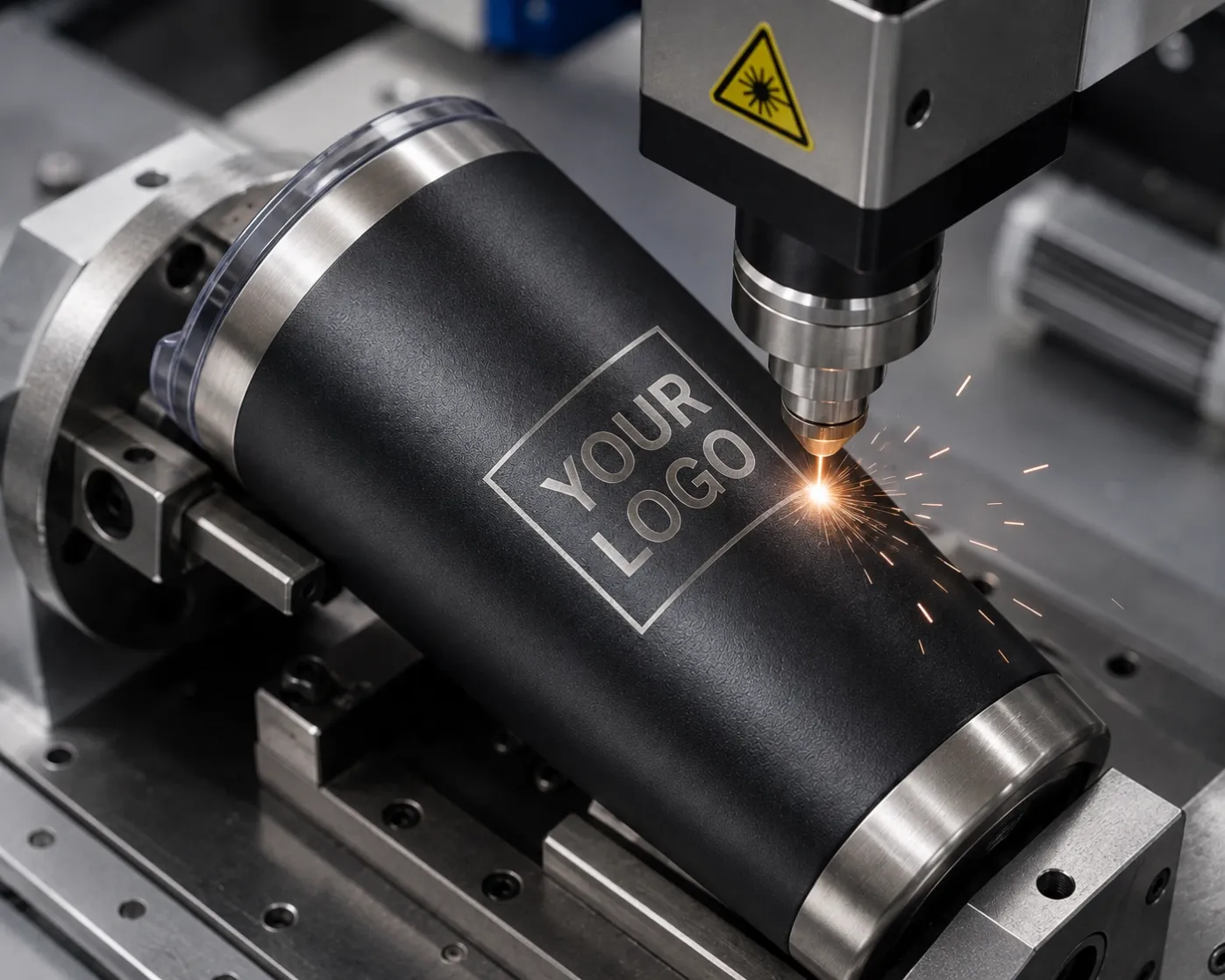
Laser engraving removes or changes the product surface rather than adding ink. It is commonly used on stainless-steel tumblers, aluminum power banks, metal pens, keychains and business-card products.
Best for:
• Long-lasting marks
• Metal and selected coated surfaces
• Simple logos, names or text
• Premium corporate gifts
Buyer checks:
The engraved color depends on the base material and coating. It may appear silver, gray, dark or tone-on-tone. Ask for a photo or physical sample made on the actual product finish.
Laser engraving is highly durable, but it does not normally reproduce a colored logo.
- Embroidery: a strong choice for apparel and textile gifts
Embroidery uses thread to create the logo. It is often selected for caps, polo shirts, hoodies, towels, bags and blankets.
Best for:
• Fabric products
• Premium staff clothing
• Simple, bold logos
• Branding that must survive repeated use
Buyer checks:
Confirm stitch count, thread colors, logo size and backing material. Small lettering and thin lines may not sew clearly. A simplified embroidery file can look better than using the original print artwork without adjustment.
Embroidery cost is usually affected by logo size and stitch count rather than only the number of colors.
How to choose the right method
Start with the product material, not the logo. Ask the supplier which methods have been tested on that exact surface. Then compare the required appearance, expected use, order quantity and budget.
For example:
• Plastic keychain: pad printing or UV printing
• Stainless-steel tumbler: laser engraving or screen printing
• Aluminum power bank: laser engraving or UV printing
• Cotton tote bag: screen printing or heat transfer
• Cap or hoodie: embroidery
• Gift box sleeve: offset printing, digital printing or foil stamping
What should be included in the artwork proof?
Before mass production, the proof should show:
• Product color
• Logo position
• Logo dimensions
• Printing or engraving method
• Pantone colors when applicable
• Orientation
• Packaging presentation
Do not approve only a logo file. Approve how the logo will appear on the actual product.
When is a sample necessary?
A sample is strongly recommended when the logo contains small text, gradients or exact brand colors; when the order uses an unfamiliar material; or when the gift is for an important launch or event. A sample can reveal color, size and adhesion issues before bulk production.
A simple RFQ checklist
Send the product link, quantity, delivery country, deadline, logo file and preferred branding method. If you are unsure about the process, explain the required result instead: full color, permanent mark, premium appearance or washable decoration.
View a low-MOQ branded product example:
https://www.suoyigroup.com/products/wavetag-bluetooth-item-finder-low-moq