Aug 12, 2026Buying Guides
How to Choose Custom Keychains for Business Giveaways and Gift Sets
A practical B2B guide to selecting custom keychains by campaign, material, logo method, attachment, packaging, artwork, and sourcing requirements.
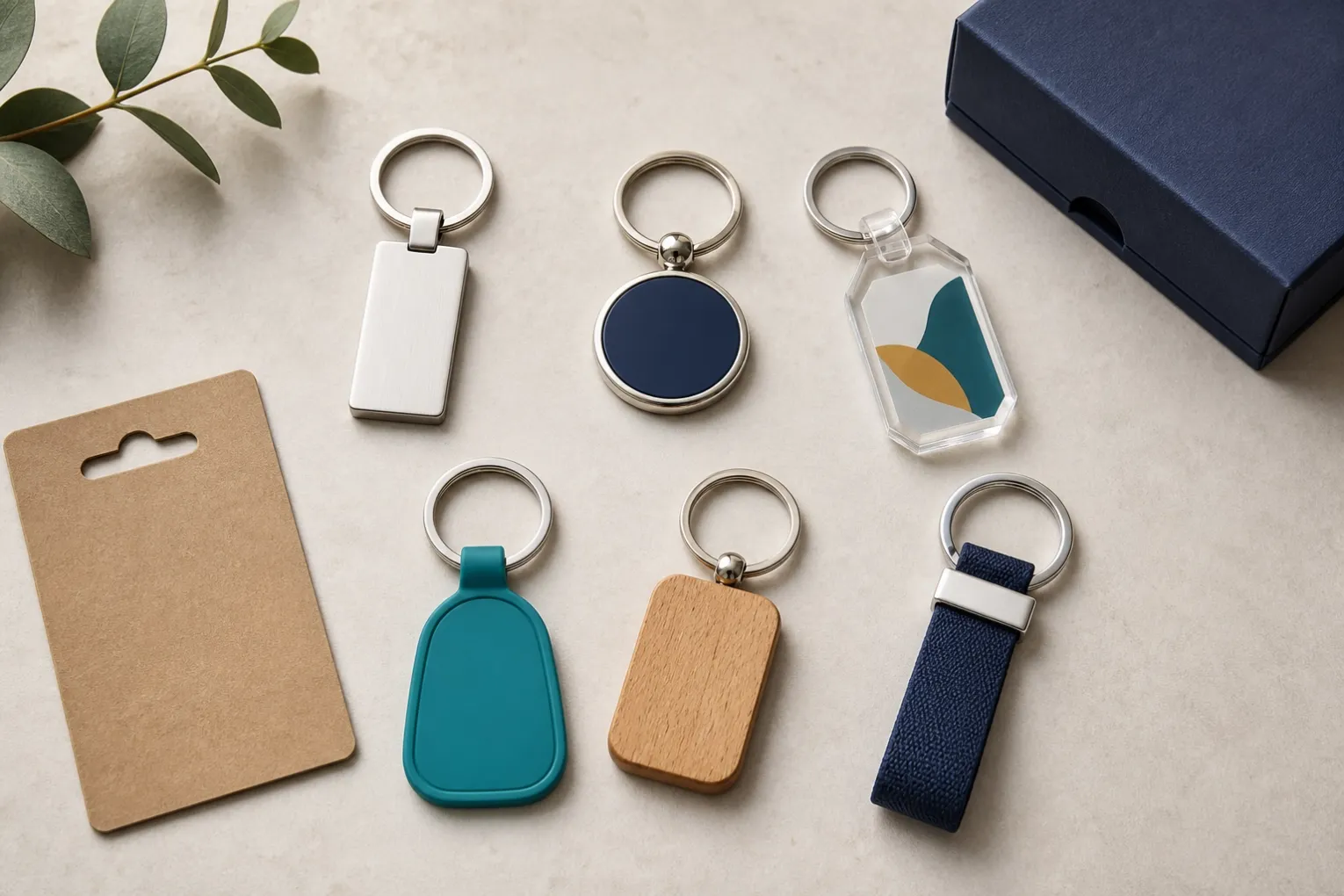
The right custom keychain depends on where it will be used, who will receive it, and how the logo should look. A trade-show giveaway should be light and easy to distribute. A keychain for a client gift set may need a better finish and more refined packaging.
Here are the main points to check before requesting a quote.
Choose the material by use
Metal
Metal keychains have a solid, professional feel. They work well for client gifts, employee kits, automotive programs, and property handovers. Common branding options include engraving, stamping, enamel, and printing.
Check the metal type, finish, thickness, weight, edges, and plating color. If a custom mold is required, ask whether it can be reused for future orders.
Acrylic
Acrylic is useful for colorful artwork and custom shapes. It is lighter than metal and suits events, retail merchandise, schools, and creative campaigns.
Confirm the thickness, print sides, edge finish, hole position, protective film, and scratch protection. Light colors and transparent artwork should be checked on a sample.
Soft PVC
Soft PVC works well for shaped, colorful designs with raised or recessed details. It is often used for sports events, youth campaigns, mascots, and souvenir products.
Small text and fine lines may need to be simplified. Confirm the number of colors, front and back design, mold charge, and material requirements.
Wood or fabric
Wood can create a simple engraved look. Fabric or leather-look tabs pair well with bags, travel products, and corporate gift sets.
Natural materials can vary in grain and color. Fabric products should be checked for stitching, edge finishing, and hardware strength.
Match the logo method to the product
Engraving produces a subtle, durable mark on compatible metal or wood. Printing is better when the design needs color. Enamel suits colored metal designs, while molded PVC works for raised or recessed shapes.
Ask the supplier to confirm:
- Maximum logo area
- Minimum line and text size
- Available colors and finishes
- One-sided or two-sided branding
- Artwork format
- Setup or tooling charges
Review the proof at actual size. A logo that looks clear on a computer screen may be too small on the finished keychain.
Keep the shape practical
A custom shape can make the product distinctive, but it still needs to fit comfortably in a pocket or bag.
Check:
- Finished size and weight
- Sharp corners
- Hole position
- Balance when hanging
- Logo orientation
- Distance between the hole and edge
Printing a paper sample at full size is a simple way to check the proportions before making a physical sample.
Check the hardware
The ring and connector affect daily use. Common options include split rings, short chains, swivel clasps, carabiner-style clips, and fabric loops.
Confirm the ring diameter, wire thickness, chain length, finish, and connection method. If staff will add keys before distribution, test how easily the ring opens.
The approved sample should include the final hardware—not just the branded part.
Select suitable packaging
Simple individual packaging is usually enough for event distribution. Retail products may need a backing card, barcode, or hanging hole. A corporate gift set may need a box insert or small pouch to stop the keychain from moving and scratching other items.
If the order contains different designs, colors, or numbers, request clear inner-pack and carton labels.
Compare quotations carefully
Make sure each supplier is quoting the same specification. Check whether the price includes:
- Material, size, and thickness
- Front and back design
- Logo method and colors
- Mold, die, or setup charges
- Ring and connector
- Individual packaging
- Sample and inspection
- Carton size and weight
- Shipping terms
A lower price may simply exclude tooling, packaging, or upgraded hardware.
Information to send with your inquiry
Include:
- Intended use and recipient
- Quantity and color breakdown
- Preferred material and size
- Logo file and color references
- Front and back requirements
- Ring or clasp preference
- Packaging and labeling needs
- Delivery destination
- Required arrival date
- Testing or documentation requirements
If you only have a reference image, explain which details must stay and which can be adjusted.
Frequently asked questions
Which material is best for a promotional keychain?
Metal suits a more formal gift. Acrylic and PVC are useful for colorful or shaped designs. Wood and fabric work when their appearance fits the wider campaign. The best choice depends on use, artwork, budget, and packaging.
Is engraving better than printing?
Engraving is suitable for a subtle tonal mark. Printing is better when the design requires color. The product material and surface determine which method will work.
Can several designs be combined in one order?
Sometimes. It depends on tooling, print setup, quantity, and packing. Send the exact quantity for each version so the supplier can confirm the options.
Request the right specification
Choose the material and construction around the campaign rather than price alone. A clear inquiry helps the supplier recommend a suitable product and prepare an accurate quotation.
View Suoyi Promotional Gifts’ custom promotional products, or send your keychain requirements with the quantity, artwork, material, packaging, destination, and required date.