Aug 31, 2026
Before Approving a 50-Unit Branded Gift Order: 9 Buyer Questions Answered
A practical FAQ based on an anonymous small promotional gift order, covering MOQ, samples, artwork, logo methods, packaging, quality checks and delivery approval.
Before Approving a 50-Unit Branded Gift Order: 9 Buyer Questions Answered
A small promotional gift order can carry the same operational risk as a much larger program. The quantity may be only 50 units, but the deadline is often fixed, the logo must be correct, and every item may be handed directly to a client or employee.
This anonymous scenario is based on a typical enquiry: 50 branded gifts for a customer event, delivery required in 18 days, individual packaging requested, and no room for a reprint. The order moved forward only after nine practical questions were answered.
- Can a supplier really accept only 50 units?
Sometimes, but “low MOQ” should never be treated as a universal promise. It depends on whether the product is already in stock, the selected color is available, the logo process fits a short run, and standard packaging can be used.
For a 50-unit program, stock-based products with laser engraving, one-color printing, or simple sleeves are usually more realistic than products requiring custom molds, dyed materials, or fully printed retail boxes.
The useful question is not only “What is your MOQ?” Ask: “What is the lowest practical quantity for this exact color, logo method, and packaging?”
- Is a physical sample required before production?
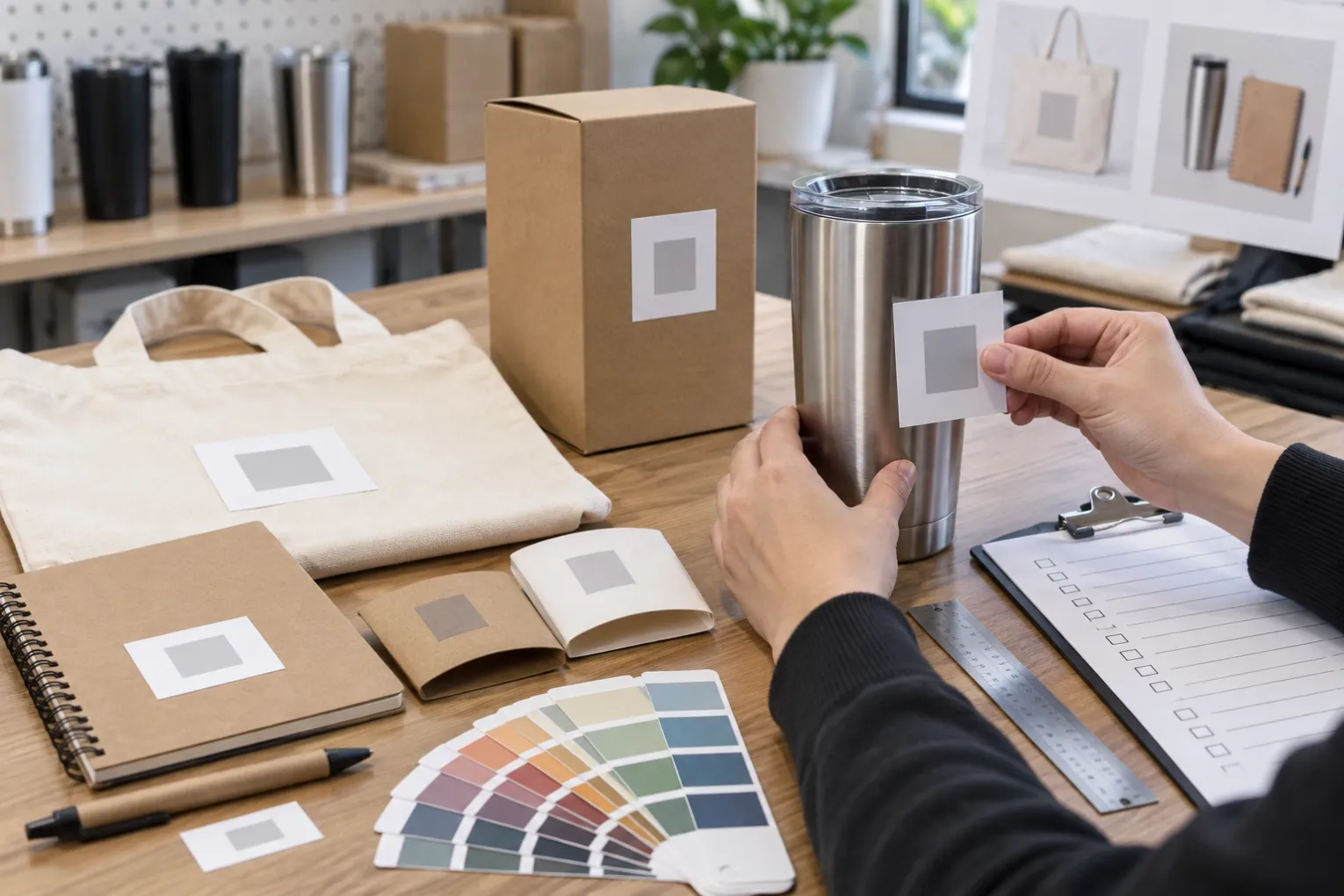
A physical sample is valuable when color accuracy, texture, fit, or custom packaging affects approval. For a simple stock item with a single-color logo, a digital proof plus a photographed first production unit may be enough.
In this case, the buyer approved the product itself from a stock sample, then approved the logo placement through a digital artwork proof. Production did not begin until a photo of the first decorated unit was checked.
This saved several days without removing the approval checkpoint.
- What artwork files should the buyer provide?
Vector artwork is the safest starting point. AI, EPS, SVG, or editable PDF files normally produce cleaner results than a small PNG copied from a presentation.
A complete artwork package should include:
• the logo file;
• Pantone or other brand-color references;
• the required logo width;
• minimum clear space;
• any restrictions on background color;
• the person authorized to approve the proof.
If a vector file is unavailable, confirm whether the supplier will redraw the logo and whether the buyer must approve that redrawn version.
- Which logo method is appropriate?
The answer depends on the material, surface, expected use, and brand requirement.
Laser engraving is durable and works well on bamboo, cork, and coated metal, but the final color comes from the material rather than a Pantone ink. Pad or screen printing can reproduce a defined color on many flat surfaces, but adhesion and abrasion should be checked. UV printing supports full-color artwork, although fine detail and surface curvature still matter.
For a natural-material item such as the DeskSprout Bamboo Phone Stand, engraving gives a restrained finish:
https://www.suoyigroup.com/products/desksprout-bamboo-phone-stand
For the CorkGuard Natural Cork Coaster Set, the buyer should also expect small variations in grain:
https://www.suoyigroup.com/products/corkguard-natural-cork-coaster-set
- What exactly is being approved?
“Logo approved” is too vague. The approval record should identify:
• product model and color;
• artwork version and date;
• logo size and position;
• decoration method;
• packaging type;
• quantity by variant;
• any carton or event labeling.
A PDF proof with a version number is better than an image scattered across several chat messages. If the buyer requests a change, the old proof should be marked obsolete.
- How will quality be checked?
A reliable small order still needs defined checkpoints. At minimum, ask for:
• incoming product inspection;
• first-piece decoration approval;
• in-process checks;
• final sampling before packing;
• quantity and carton-label verification.
For promotional products, final checks often include logo position, color consistency, print adhesion, scratches, product function, packaging condition, unit count, and carton marks.
For an electronic accessory such as the LoopCharge Recycled ABS Multi Cable, the function test matters as much as the logo:
https://www.suoyigroup.com/products/loopcharge-recycled-abs-multi-cable
- Can different products be combined in one shipment?
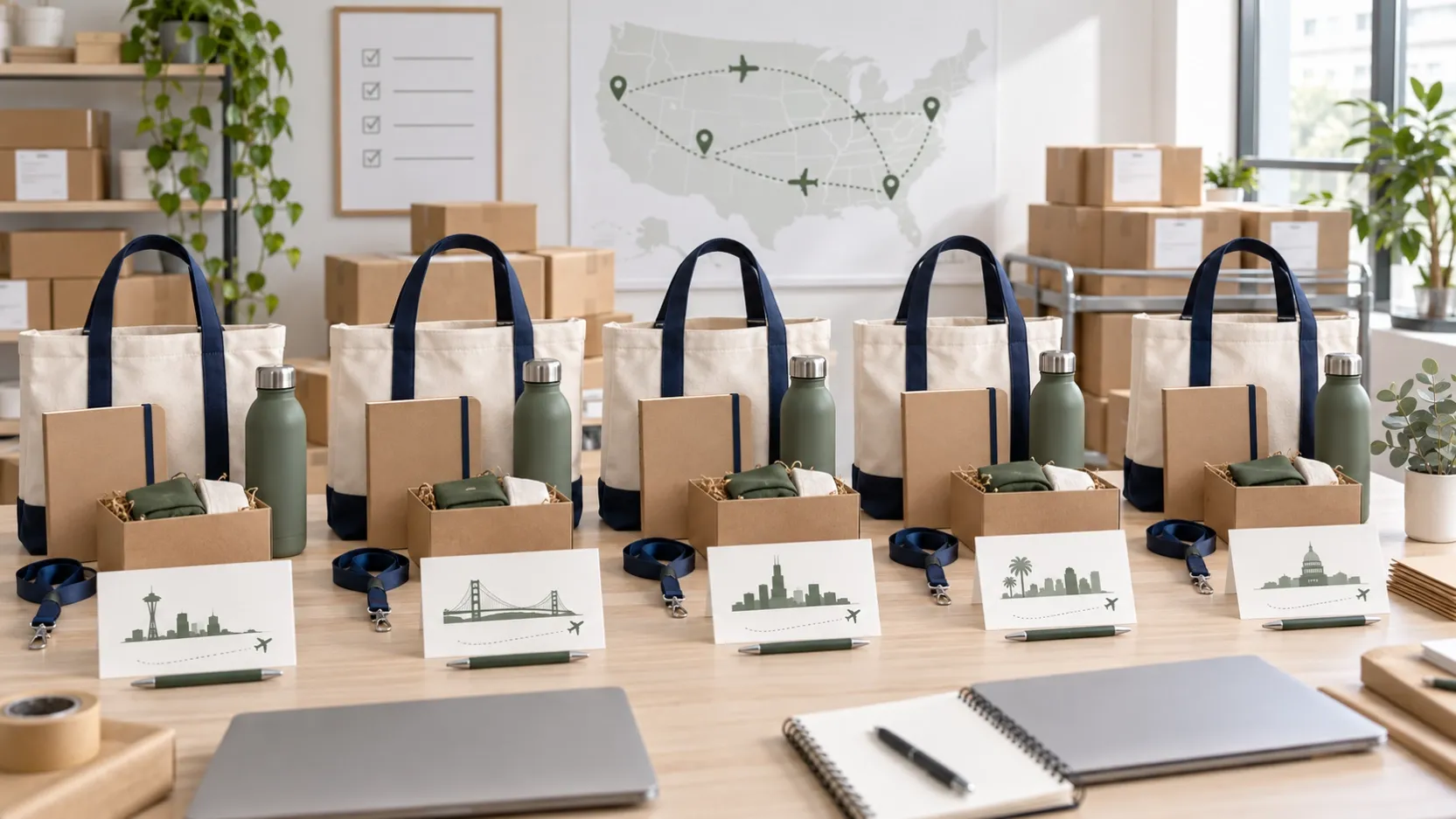
Yes, but consolidation creates its own risks. Each inner box should identify the product, quantity, and destination. A mixed shipment needs an item-level packing list and a clear rule for whether cartons may contain more than one SKU.
If the gifts will be distributed at an event, the supplier should know whether each set must arrive pre-kitted or whether items can be packed in bulk. That decision changes labor, packaging volume, carton count, and freight cost.
- What happens if the delivery date begins to slip?
A single final delivery date is not enough. The order should have visible milestones:
• artwork approval;
• sample or first-piece approval;
• production completion;
• final inspection;
• dispatch;
• required arrival date.
If one milestone moves, the supplier should explain the new risk immediately and offer practical options: simplify packaging, use an available color, split the shipment, or change the transport method. Silence is more damaging than an early warning.
- What information should be included in the first enquiry?
A buyer can receive a more useful quotation by providing seven details at the start:
- intended use or event;
- required quantity;
- destination country and postal code;
- required arrival date;
- preferred product color;
- logo file and decoration expectation;
- packaging and target budget.
This allows the supplier to check feasibility instead of sending a generic price that later changes.
A practical 50-unit decision framework
For a small, time-sensitive order, compare products using four columns: stock availability, realistic decoration method, packaging complexity, and approval time.
For example:
• Bamboo phone stand: stock color + laser engraving + standard box.
• Cork coaster set: natural material + engraving + kraft sleeve.
• Plantable paper notebook: stock cover + one-color print + paper band.
• Recycled multi cable: stock body color + pad print + individual pouch.
The SeedNote Plantable Paper Pocket Notebook is a useful option when the sustainability story is part of the campaign:
https://www.suoyigroup.com/products/seednote-plantable-paper-pocket-notebook
What reduced uncertainty in this order?
The buyer did not rely on a broad promise that “quality will be good.” Confidence came from five visible records:
• one approved artwork version;
• one photographed first decorated unit;
• one short inspection checklist;
• one packing photo before cartons were sealed;
• one final packing list with carton quantities.
These records are simple, but they make responsibility clear and prevent avoidable misunderstandings.
Final takeaway
For a 50-unit branded gift order, speed should come from removing ambiguity—not from skipping checks. Confirm the product, decoration, artwork version, packaging, inspection points, and milestone dates before production begins.
When requesting a quotation, send the application, quantity, destination, deadline, logo file, and packaging requirement together. A supplier can then give you a feasibility-based answer instead of a generic low-MOQ promise.