Sep 1, 2026
Planning Giveaways for a 150-Person Trade Show: Budget, Packing and Deadline Checklist
A practical event-gift plan for 150 attendees, covering quantity buffers, product mix, branding approvals, packing volume, booth distribution and delivery milestones.
Planning Giveaways for a 150-Person Trade Show: Budget, Packing and Deadline Checklist
A trade show giveaway has to do more than look attractive in a product photo. It must arrive before the venue deadline, fit the booth storage plan, survive transport, be easy for staff to distribute, and give the right visitors a reason to remember the brand.
This practical scenario uses a 150-attendee target to show how buyers can plan the product mix, budget, artwork approvals, packing and delivery without creating unnecessary risk.
Start With the Event Objective
Before selecting products, define the action the gift should support. A giveaway for every visitor has a different job from a higher-value item reserved for qualified prospects.
For this scenario, the event team set three objectives:
• attract visitors to a product demonstration;
• reward qualified conversations;
• provide a useful item that continues to show the brand after the event.
That led to a two-level plan instead of buying 150 identical premium gifts.
A Practical Quantity Split
The team expected 150 relevant visitors but ordered 165 units in total to create a 10% buffer.
The split was:
• 110 lightweight general giveaways;
• 40 higher-value gifts for qualified prospects;
• 15 reserve units for staff, replacements and unexpected attendance.
The buffer matters because products may be damaged, misplaced, used in pre-event photography or requested by speakers and partners. Ordering exactly the forecast quantity leaves no room for normal event changes.
Budget the Whole Delivered Program
The unit price is only one line in the event budget. Buyers should compare the total delivered cost, including:
• product cost;
• logo setup and decoration;
• individual packaging;
• kitting or labeling;
• sample charges;
• export cartons;
• freight and local delivery;
• duties or taxes where applicable;
• venue handling fees.
For example, a compact product may cost slightly more per unit but save money by reducing carton volume and venue storage. A bulky low-price gift can become expensive after airfreight and event-handling charges are added.
Use a Two-Level Product Mix
For general booth visitors, choose a compact item that can be explained in a few seconds. For qualified prospects, use a more distinctive product connected to the event theme.
A useful general giveaway could be the ClipGlow Magnetic Safety Light. It clips to backpacks or clothing and gives booth staff an immediate story about visibility and everyday usefulness:
https://www.suoyigroup.com/products/clipglow-magnetic-safety-light
For a technology-focused prospect gift, the SpinDock Magnetic Phone Grip Stand combines a phone grip, adjustable stand and rotating ring:
https://www.suoyigroup.com/products/spindock-magnetic-phone-grip-stand
For attendees who carry chargers and accessories, the FoldNest Recycled Felt Tech Organizer offers a practical onboarding or travel-kit format:
https://www.suoyigroup.com/products/foldnest-recycled-felt-tech-organizer
This type of product mix helps control the budget while keeping a stronger reward available for higher-value conversations.
Confirm Branding Before Production
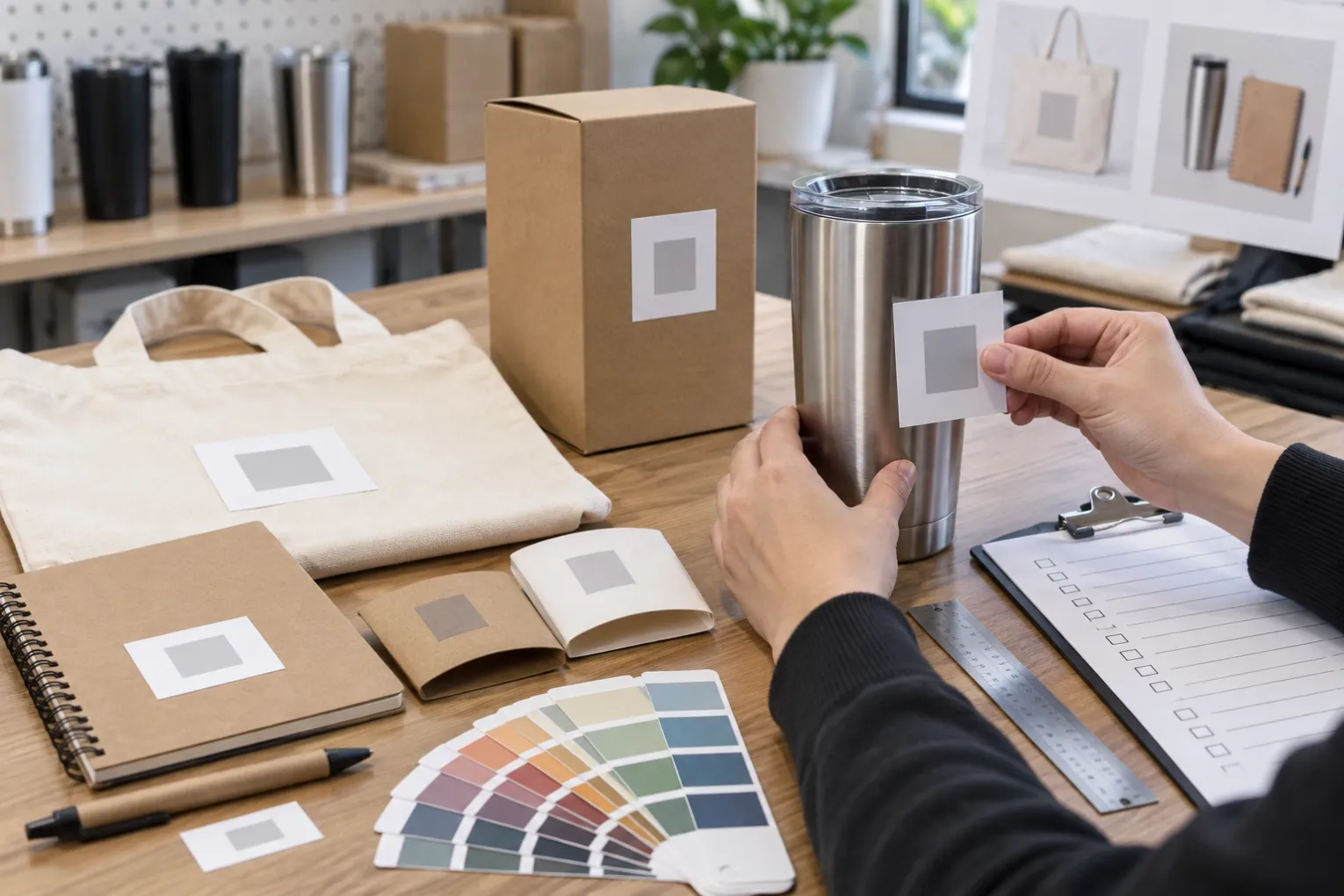
A logo approval should record more than the artwork file. The final proof should show:
• exact product model and color;
• logo version;
• decoration method;
• logo width and position;
• print or engraving color;
• packaging type;
• approval date and approver.
For an event deadline, artwork should have one named owner. When several departments send separate comments, the supplier may not know which version is final. Use one consolidated approval and mark earlier versions as obsolete.
Check the Physical Sample Only Where It Adds Value
Not every event order requires a fully decorated physical sample. The right approval route depends on the product and risk.
A digital proof plus first-piece photo may be enough when:
• the product is a standard stock item;
• the logo is one color;
• the decoration area is simple;
• the schedule is tight;
• exact material color is not critical.
A physical sample is more important when:
• the brand color must be matched closely;
• the product has an unusual surface;
• the logo is very small or detailed;
• packaging is custom printed;
• the gift will be reviewed by senior stakeholders.
Decide this at the start. Requesting a physical sample late in the schedule can delay the whole order.
Plan Packing Around the Booth
Ask how staff will actually store and distribute the gifts. The shipping carton is not the final operational plan.
For 150 attendees, confirm:
• number of units per inner box;
• number of inner boxes per carton;
• carton dimensions and weight;
• whether different gift levels are clearly labeled;
• whether reserve stock is packed separately;
• whether the venue accepts mixed cartons;
• who receives the shipment onsite.
Use simple labels such as “General Giveaway,” “Qualified Prospect Gift” and “Reserve—Do Not Open First.” This prevents premium items from being distributed too early.
Calculate Booth Storage Before Shipment
Carton volume can become a problem at small booths. Ask the supplier for the final carton count and dimensions before approving the shipping method.
A quick planning formula is:
Number of cartons × carton length × width × height = total shipment volume.
Then check whether those cartons fit in the booth cabinet, event storage room or delivery vehicle. If not, reduce packaging volume, use flat-packed sleeves, split delivery between the hotel and venue, or select a more compact product.
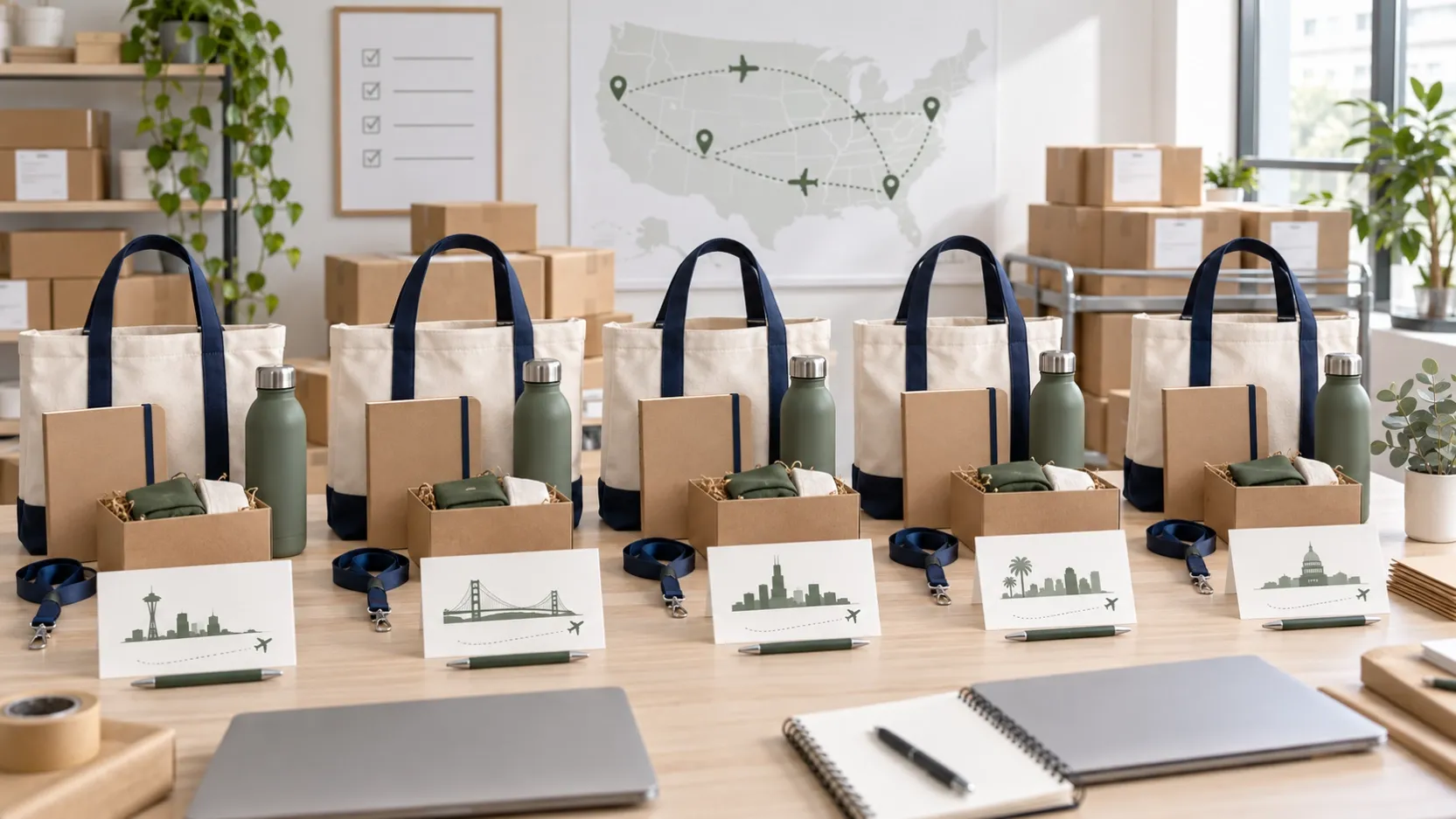
Build a Reverse Deadline
Start with the required arrival date and work backward. Do not use the event opening date as the delivery target.
For a typical international program, the schedule might be:
Day 0: event opens
Day -3: goods available at the venue or local warehouse
Day -7: target arrival in the destination city
Day -12: dispatch
Day -15: final inspection and packing
Day -25: bulk production complete
Day -27: first-piece approval
Day -30: artwork approved
Day -35: order and product specifications confirmed
The exact timing varies, but the sequence makes dependencies visible. If artwork approval moves by three days, the buyer can see immediately which later milestone is affected.
Prepare a Delivery Contingency
Before production starts, agree on the options if the schedule changes. Practical alternatives may include:
• switching to an available stock color;
• using a simpler logo method;
• replacing a printed gift box with a kraft sleeve;
• shipping the premium gifts first;
• dividing the order between air and economy freight;
• delivering to a local warehouse instead of directly to the venue.
A contingency is useful only when it is discussed before the deadline becomes critical.
Create a Booth Distribution Rule
The event team should know who receives each gift level. Otherwise, the first visitors may receive all the premium stock.
A simple rule could be:
• general gift after attending the demonstration;
• premium gift after a qualified sales conversation or booked follow-up;
• reserve stock released only by the booth manager.
Track distribution with a basic tally sheet or lead-scanning tag. This also helps the buyer compare gift usage with qualified leads after the event.
Final Pre-Shipment Checklist
Before cartons are sealed, request confirmation of:
• final product quantity;
• logo appearance and position;
• product function;
• individual packaging;
• inner-box labels;
• carton marks;
• carton count, dimensions and weight;
• packing-list quantities;
• dispatch method and tracking reference.
Photos of the finished products, open inner boxes and labeled cartons create a simple evidence trail.
Final Takeaway
A successful trade show giveaway plan connects product choice with booth operations. For a 150-person event, the strongest approach is usually a controlled product mix, a realistic quantity buffer, one artwork approval owner, compact packaging, a reverse deadline and clear distribution rules.
When requesting a quotation, send the event date, delivery city, expected visitor count, product mix, logo file, packaging preference and target budget together. This allows the supplier to evaluate the full program rather than quoting an isolated unit price.